What is an heirloom toy — and what makes one earn the name
An heirloom toy is made to outlast the childhood that begins with it — kept, mended, and passed on. Here is the honest definition, the four materials that earn it, and what disqualifies a toy from the name in 2026.
An heirloom toy is one made to outlast the childhood that begins with it — kept, mended, then passed on to a sibling, a niece or a child of the original owner. The honest definition has four parts: hand or studio finishing, natural-fibre materials, repairable construction and a story the family can tell about it. Most plush sold as "heirloom-quality" in 2026 fails at least one of the four. Glowkin's emotional companions are made for that test in Lancaster, UK from £34.99 and built for between two and ten years of daily use before the cot-to-school-bag journey. Without a name and a story, the keepsake disappears in the loft within a year, no matter how good the construction.
The honest definition
An heirloom toy is a toy designed and finished to survive a single childhood, be repaired across two more, and arrive in the hands of a grandchild still recognisable. It is not the most expensive toy, not necessarily mohair, jointed or numbered. It is the toy used every day, mended every few years and passed on without ceremony. The BBC News piece on a Witney teddy collection that fetched £290,000 is the auction-house version of the story; the home version is quieter and far more common.
An heirloom toy is, plainly, a toy made for the long arc — built around materials, finishing and the story a family tells about it, not the price tag. The form has been understood for over a century. The original Steiff bears of 1903 are heirlooms because they were stitched from mohair, jointed at the limbs, double-seamed at stress points and signed by hand. Glowkin's emotional companions are made to a similar standard in 2026 in a small Lancaster, UK studio: weighted lower body, embroidered features, OEKO-TEX brushed cotton with wool-felt accents, hand-finished seams. The plush companion costs £34.99 from Glowkin, and a bedtime ritual takes thirty to forty minutes once settled — the heirloom toy is the centre of it before anyone calls it heirloom.
The four materials that earn the name
Heirloom toys, across a century of European craft, get four material choices right. Skip any one and the object becomes generic.
1. Skin
Mohair, brushed wool-felt or premium OEKO-TEX brushed cotton. Synthetic plush feels fine in the shop and pills within a fortnight; the heirloom-grade version holds shape and pile after twenty washes and ten years of small-fist hugging.
2. Eyes
Hand-embroidered in cotton or silk thread. Plastic safety eyes are the modern shortcut; the heirlooms that survive a generation have stitched eyes — they hold expression, survive washing and never become a choking hazard.
3. Fill
Hypoallergenic polyester or wool in the upper body, weighted micro-pellets in the lower. The weight gives the toy posture: it sits upright on a shelf, holds its shape in a child's lap, and feels quietly substantial.
4. Seams and joints
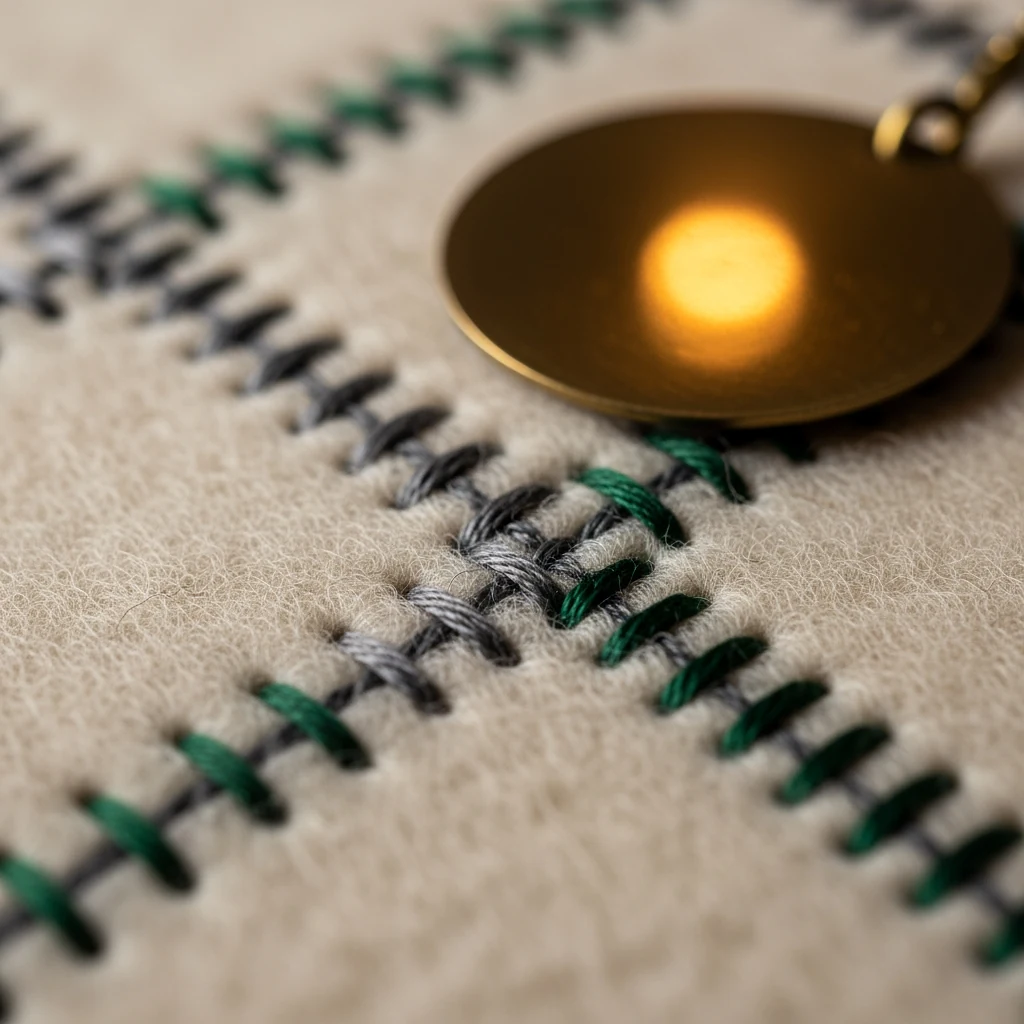
Double-stitched at every stress point is the working minimum; disc-jointed limbs is the heirloom standard. The toy will be dragged by one ear in the second year. The seams have to hold for that and another twenty years afterwards.
What disqualifies a toy from the heirloom name
Most plush sold as "heirloom-quality" in 2026 fails at least one of the four material tests above. Three patterns are the most common.
The first is printed personalisation across the front: a name printed across the chest, a date plated on the foot, a face printed onto the fabric. Print fades, the date fixes the toy to one moment, the personalisation outlives the bond. The second is electronic features: music boxes, light-up bellies, voice recorders. The electronics fail first; once dead, the toy is a sealed unit no studio can repair. An heirloom is repairable by a tailor with a needle, not by a manufacturer with a soldering iron. The third is luxury collector tier intended for display. £200-plus mohair limited editions are works of craft, but the child nervous to scuff the gift cannot bond with it.
The simplest disqualifying test is honest use. If the toy lives in a glass cabinet it is a collector piece. If it lives on a high shelf out of reach, it is decoration. If it lives on the bedside, gets washed every fortnight and is the first thing the child reaches for in the dark, it is on its way to becoming a real heirloom. The BBC History of the World object on British teddy bear heritage frames the same point — bears that survive a century are the ones carried, not displayed. The honest middle tier — £30 to £80, hand-finished, weighted, embroidered, named — is where most modern heirlooms come from, and that is exactly where Glowkin's emotional companion plush sits.
How heirloom toys travel between generations
The heirloom toy moves between generations in a quiet pattern that has not changed in a hundred and twenty years. It is owned and carried by one child until they outgrow it, stored with care by their parent, then handed back as an adult when they have a child of their own. The bear that earned its place at four can sit on a maternity-ward bedside at thirty. The Mumsnet thread on what families actually keep is the most useful primary source — the answer is consistent: a single bear, a single book and one piece of woollen warmth.
The keepsake-grade version of this pattern is the same logic that picks a keepsake bear for a newborn or a christening keepsake for a godchild — heirloom not landfill, quiet not loud, restraint over decoration. The toy handed back at twenty-eight is the one finished honestly the first time. There is no shortcut. A £9 polyester teddy does not become an heirloom because the family decides to keep it; it becomes polyester with sentimental weight, which is a far shorter category. A £34.99 plush companion finished with weighted lower body, embroidered features and a story on the hangtag has the structural chance — the rest is up to the family.
What an heirloom toy is not
An heirloom toy is not a designer collaboration, not a limited-edition mass-market piece, and not a plush with a serial number. It is not a "memory bear" made from a loved one's clothes — a beautiful adult keepsake, but a separate category. It is not cradle furniture, a silver cup or a christening photograph. The Glowkin lore page sets out three rules: heirloom not landfill, quiet not loud, slowly on purpose.
The honest test is repetition. An heirloom toy is the boring familiar object on the bedside that has been there every night for a decade. It is the bear the eight-year-old still keeps above the bed. It is the plush the fourteen-year-old explains when they bring it out of the cupboard. It is the toy the twenty-eight-year-old hands to their first child without ceremony. Across that arc, the toy is washed, mended, sometimes re-stuffed, and quietly cared for by adults who understand the object is a small letter from one generation to the next. That is what disqualifies most "heirloom-quality" plush sold in 2026 from the name.
Frequently asked questions
What is the difference between an heirloom toy and a keepsake toy?
An heirloom toy is meant to be passed between generations; a keepsake is meant to be kept by the original child. Most heirlooms started as keepsakes — a single weighted bear given on a birthday or christening that survived twenty washes. Every heirloom is a keepsake; not every keepsake is yet an heirloom.
How do I tell if a toy is heirloom-quality before I buy it?
Pick it up — it should weigh 350 to 500 grams. Press the eyes — embroidered, not plastic. Pull at the limbs. Smell it — no scent. Read the hangtag — a name and a story. If all five pass, the toy has a real chance.
Are vintage Steiff or Farnell bears the only real heirloom toys?
No. They are the most famous, but a modern hand-finished plush from a small studio can be heirloom-grade if materials and construction hold. A £34.99 Glowkin companion finished in Lancaster sits in the same category as a £400 vintage Steiff in intent — the only difference is age.
Does an heirloom toy need to be expensive?
No. The middle tier — £30 to £80, hand-finished, weighted, embroidered, named — produces most heirlooms that actually get passed down. Under £15 rarely passes the construction test; over £200 is usually display-first.
Can a modern plush become an heirloom in twenty years?
Yes — if materials and construction were right at the start. The toy becomes one because a family used it, washed it, mended it and quietly kept it. The structural chance has to be there at purchase.
What should I do if my child's heirloom toy is falling apart?
Mend it. Re-stitch seams, re-fill the lower body, replace the hangtag if illegible. Most small studios will repair a plush they finished — Glowkin will, for the lifetime of the original owner.
Be first to hold one.
Glowkin's first run is small and waitlist-led. Join The Glowkin letter — one slow note a month — and be first to know when Blaze, Fira, Glint and Ash arrive.