The keepsake bear that earns a name and stays on the shelf
A keepsake bear is the teddy that earns a name in the first month and a place on the shelf at fourteen. Here is what makes one work — and the four kinds we would politely skip.
A keepsake bear is a teddy made to outlast the childhood that begins with it — not a christening prop, not a Steiff in a glass case. The honest version weighs 350 to 500 grams, is hand-finished in wool-felt or brushed cotton, has embroidered features rather than plastic eyes, and earns a name within a month. Glowkin's emotional companions are made for that test in Lancaster, UK from £34.99, built for between two and ten years of daily use before they pass the cot-to-school-bag journey. A real keepsake bear lasts twelve years on a bedside table and another forty in a loft. Without a name, the keepsake disappears in the loft within a year.
What a keepsake bear actually is
A keepsake bear is a teddy designed to be kept — slept on, carried to nursery, washed twenty times and still recognisable at fourteen. It is not a display piece behind glass and not a £9 polyester toy that lasts a school year. The form is older than most brands selling it: the modern stitched bear is rooted in 1903 Steiff and the British Farnell tradition that followed. The BBC News piece on a Witney teddy bear collection that fetched £290,000 is a useful long view — the bears that survive a century are mohair, jointed and quietly cared for.
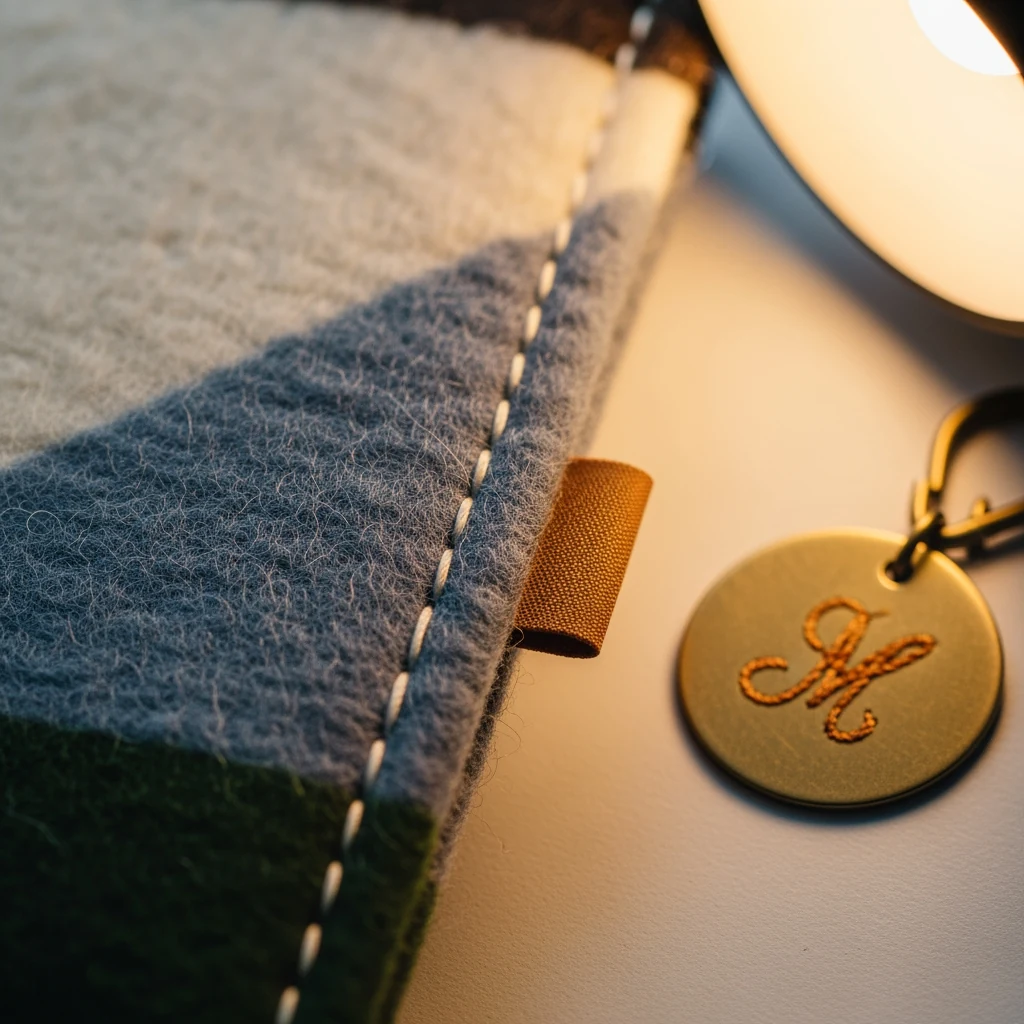
A keepsake bear is, plainly, a teddy with the right materials and the right restraint. Weighted lower body, embroidered eyes, brushed wool-felt or mohair-blend skin, hypoallergenic fill. No plastic eyes — they pop off in the first wash. No music box, no light, no battery. The keepsake earns its name by repetition: Bear, then Bear-Bear, then a real name the child reads off the hangtag at four. Glowkin's plush sits at £34.99, finished in a small studio in Lancaster, UK. The point is to be carried up the stairs at 8pm by a sleepy child, every night, for a decade. A bedtime ritual takes thirty to forty minutes once settled; the keepsake bear is the warm familiar centre of it.
The four materials that make one last
A teddy bear that becomes a keepsake gets four material choices right. Skip any one and the bear becomes generic.
Skin
Mohair-blend or brushed wool-felt for the heirloom tier; OEKO-TEX brushed cotton with wool-felt accents for the £30–£45 band. Synthetic plush feels fine in the shop and pills within a fortnight.
Eyes
Hand-embroidered in cotton or silk thread. The keepsake bears that survive a generation have stitched eyes — they hold expression, survive washing and do not become a choking hazard at any age.
Fill
Hypoallergenic polyester or wool in the upper body, weighted micro-pellets in the lower. The weight gives the bear posture: it sits on a shelf rather than slumping. Without weight a bear is a balloon with a face.
Joints and seams
Disc-jointed at the limbs is the heirloom standard; double-stitched at every stress point is the working minimum. The bear will be dragged by one ear in the second year. The seams have to hold.
Why the bear is the lasting form
There is a reason the teddy bear survives and most other plush forms do not. Bears stand without leaning. Bears can be jointed, so a child poses them for play then leaves them on the shelf. Bears have a face geometry — round head, low-set ears — small children read as kind without being taught. The BBC Tiny Happy People entry on the Baby Club soft toy describes how a single soft toy becomes a daily anchor; the bear is the form most likely to keep that role into school.
Glowkin's emotional companions are not bears in the strict sense — they are dragons, the four Dragonkin archetypes of courage, wonder, resilience and joy — but they are built to the bear standard. Weighted seated posture so they sit upright. Embroidered features so the face survives twenty washes. Hand-finishing in Lancaster so the seams hold under three years of small-fist hugging. When families come to us looking for a keepsake bear, they want a bear-grade companion — most of the market sells dressed-up plush at bear prices. Honest finishing at £34.99 is the difference between a keepsake and an outgrown toy. The Glowkin lore page sets out the three rules we do not break.
The four kinds of keepsake bear we would skip
Some of the bears sold as keepsakes in 2026 will not earn a place on a shelf. They have their place, but be honest about what they are.
The first is the birth-stat bear: polyester teddy with the baby's date and weight printed across the front. Printing fades; the date fixes the bear to one moment; the bear is gone by year three. The second is the cremation bear marketed as a cuddly toy — meaningful, but it belongs in a memorial drawer, not a child's bed. The third is the memory bear made from baby clothes. They make wonderful adult keepsakes, but the patchwork is fragile, the seams mixed-fabric, and a real toddler destroys one in a fortnight. They are kept on shelves, not played with — fine, just not the brief most parents are buying for.
The fourth is the luxury collector bear at £200 or more — Charlie Bears, Steiff limited editions, hand-numbered mohair pieces. These are works of craft and worth every penny, but they are display objects. A child who is nervous to scuff the gift cannot bond with it, and the keepsake never earns the name. The middle lane — £30 to £60, hand-finished, weighted, embroidered, with a story — is the lane where the bear is precious enough to feel kept and battered enough to be carried. That is where the Glowkin emotional companions sit.
What to look for when buying one in 2026
Use the same five-line check we use in the Lancaster studio. Pick the bear up: it should weigh 350 to 500 grams. Press the eyes — embroidered, not plastic. Pull gently at the limbs — they should hold. Smell it — no scent, not lavender, not perfume. Read the hangtag — a name and a one-line story.
If all five pass, the bear has a real chance. If any one fails, you are buying a teddy, not a keepsake. Price is not the test; finishing is. A £45 hand-finished bear from a small studio outlasts a £180 designer collaboration with synthetic fur and printed eyes. The Mumsnet thread on what families actually keep is the best primary source — the bears that survive twenty years are the simple weighted ones with stitched faces, not the elaborate ones with bows. A first-birthday keepsake chosen by the same standard lasts for the same reason.
Frequently asked questions
When should we buy the keepsake bear — before or after birth?
Either is fine; before birth is gentler. Buying after means the bear arrives in week one alongside the cards and the muslin squares. Buying before means it is on the cot rail when parents come home. Avoid buying during pregnancy and giving as a fourth-birthday gift — the bear has to arrive early or it never earns a place.
Can a keepsake bear be a Christmas or birthday present?
Yes, if the child is under three. A bear given at a first or second birthday becomes the bear of the rest of childhood. Beyond age three the slot is usually filled; a new bear becomes a friend rather than the keepsake.
What is the difference between a keepsake bear and a memory bear?
A keepsake bear is for the child to use; a memory bear, traditionally, is made from a loved one's clothes for the family to keep. The two are often confused in 2026 because both use the word "memory." The simple test: who is meant to hold it daily? Child means keepsake; shelf means memory.
How do I wash one without ruining it?
Cool wash, gentle cycle, inside a pillowcase. Air dry flat. Avoid the tumble dryer; heat melts polyester glue and warps wool-felt. Brush gently once dry. A keepsake bear should survive twenty washes if finished properly.
Do boy children bond with keepsake bears as deeply as girl children?
Yes — equally. The form of the bear is gender-neutral; what changes is the language. Boys often use action language ("Bear is going on a mission"); girls more often use relationship language ("Bear is my best friend"). The bond is the same.
Where does the keepsake bear live once the child outgrows it?
On a bookshelf in their own room, typically until the move out at eighteen, then in a loft. Many come back out at the next big life event — a wedding, a first child. The bear that earned its place at four can sit on a maternity-ward bedside table at thirty. The same logic applies when buying a newborn keepsake for a sibling years later.
Be first to hold one.
Glowkin's first run is small and waitlist-led. Join The Glowkin letter — one slow note a month — and be first to know when Blaze, Fira, Glint and Ash arrive.