Soft toys for newborns — what is actually safe in the first year
A short, opinionated guide to soft toys for newborns — what passes the cot test, what fails it, and how to gift one that the child still has at five.
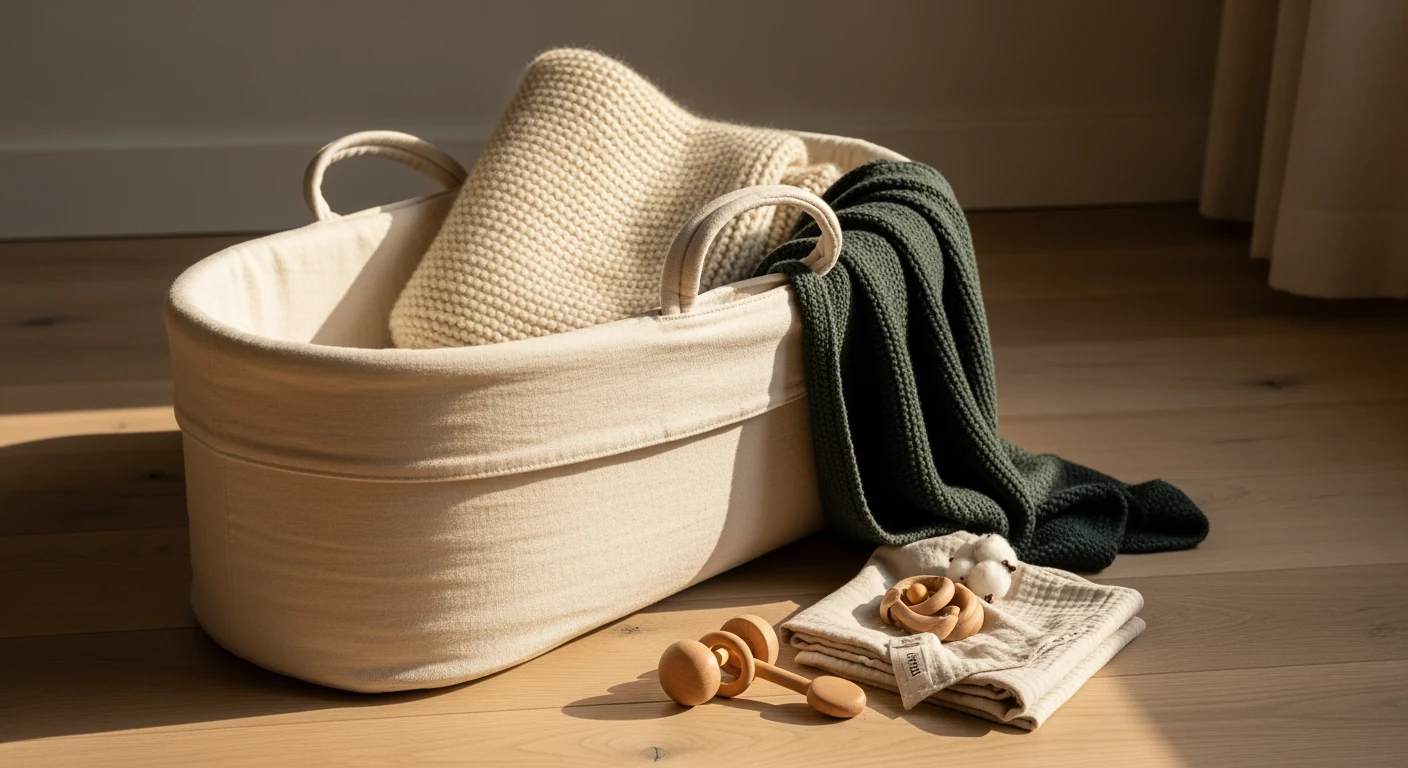
A safe newborn soft toy in 2026 is firmly stuffed, has no detachable parts, carries a CE or UKCA mark, and uses OEKO-TEX Standard 100 fabric. The NHS keeps the cot empty for the first six months, so the toy waits on the shelf during sleep and joins waking play from week one. A weighted heirloom plush from Glowkin's [companion range](https://glowkin.co.uk/shop/companions/) costs £34.99, is gifted at birth, and comes into use from around six months when cot rules ease. Without those four safety markers, a soft toy can quietly fail the cot test within the first three weeks of nursery handling.
What makes a soft toy safe for a newborn
A newborn-safe soft toy is one that meets UK toy-safety regulation BS EN 71 and the General Product Safety Regulations 2005, has no parts a baby could detach and inhale, and is firmly stuffed enough to hold its shape under a small palm. CE or UKCA marking is the legal floor. Everything above is craft.
The NHS guidance is unambiguous: keep the cot clear of soft toys, pillows, and loose bedding for the first six months. The safer sleep advice for babies sets the rule that has cut sudden infant deaths by more than four-fifths since 1991. A soft toy at birth is for the carrier, the pram in supervised waking time, and the shelf above the cot — never the cot itself.
A newborn-safe soft toy is firmly stuffed, fully embroidered (no glued or sewn-on plastic eyes), has no ribbons longer than 22 centimetres, and uses fabric tested to OEKO-TEX Standard 100. Without OEKO-TEX, the fabric may carry residual formaldehyde or azo dye that fails the saliva test a newborn applies within minutes. Without firm stuffing, the toy compresses against the face under the lightest weight and becomes a suffocation risk. Glowkin's plush companions carry both CE and OEKO-TEX certification and embroider every detail in cotton thread — there is nothing to detach. The toy sleeps on the nursery shelf until around six months, then joins the cot when the American Academy of Pediatrics safe sleep guidance confirms the rules ease and the baby has the head control to push fabric away.
Why the first six months are different
For the first six months, a soft toy is a waking-hours object — held by the parent, watched, sniffed, and put back on the shelf at sleep. This is not over-caution. So a gift-buyer at a baby shower in 2026 is not buying for the cot. They are buying for the journey home from hospital, the pram in the park, the lap during breastfeeding, the shelf above the changing mat. The toy is meaningful but inert — present, watched, kept.
That changes the question. The question is not "does the baby need this now". It is "will the child still want this when they actually carry it" — which means the toy has to survive being on the shelf for six unimpressed months without going limp, going out of style, or going to the charity bag during the first house move. Mass plush rarely passes that test. Hand-finished, embroidered plush usually does. The brand briefs on our studio page explain why we make every Glowkin plush this way. Tactile permanence is the whole point: the toy has to feel kept the moment it is unwrapped, otherwise it never becomes the one. A meaningful plush gifted at birth costs roughly £34.99 from Glowkin and is built to outlast the early years rather than replace itself every six months.
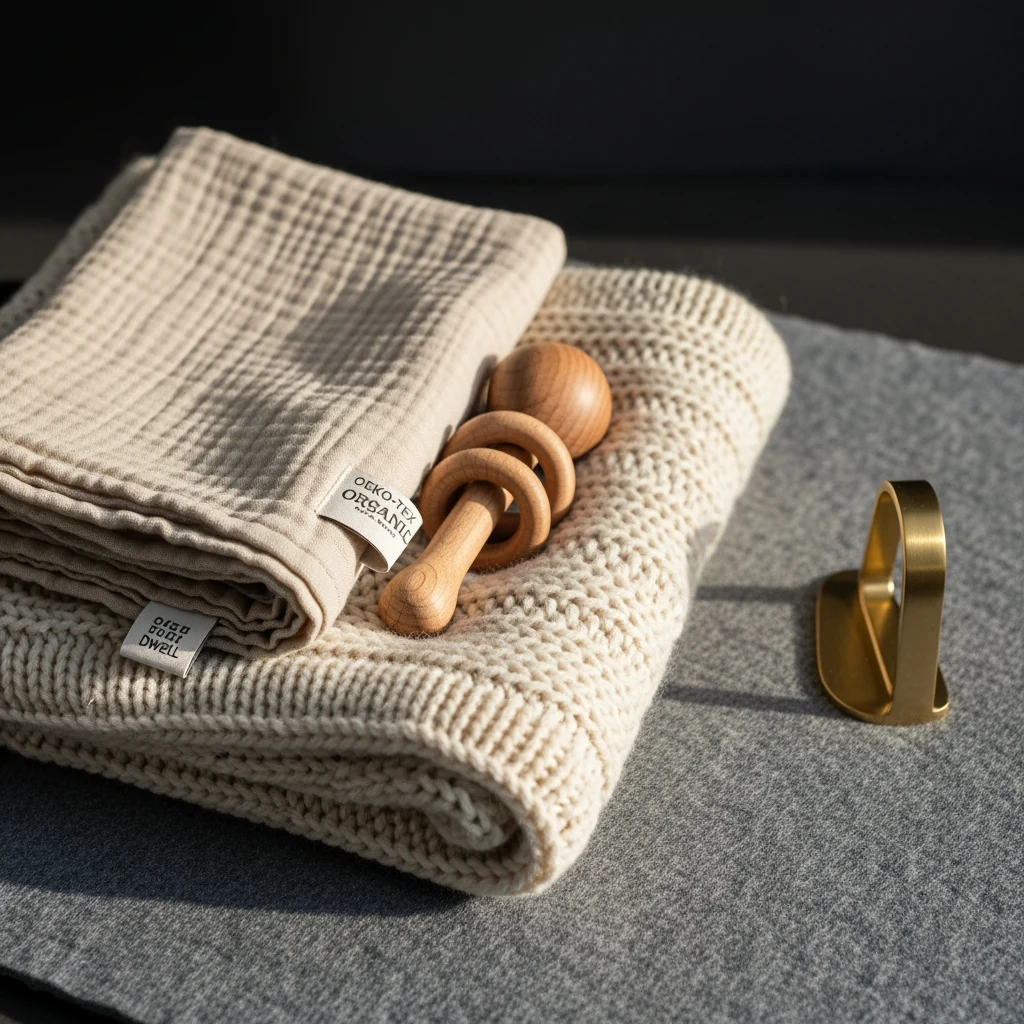
What size and weight a newborn soft toy should be
A newborn-safe soft toy sits between 15 and 28 centimetres seated. Smaller than 15cm risks becoming a choking hazard once seams loosen with washing. Larger than 28cm is awkward in a Moses basket and a chore in a pram. Weight depends on the brand's intention.
Standard plush is unweighted. Heirloom-emotional plush — designed to be carried for years — is weighted between 350 and 500 grams. Below 350g the calming effect parents describe disappears; above 500g the child stops carrying it. Glowkin's 28cm Blaze companion sits at the lower end of that band so it is carryable from around six months, when cot rules relax and the BBC Tiny Happy People milestones for early development confirm the baby has the strength to redirect their face from any soft surface. A weighted heirloom plush bought at birth is a long-game purchase. It is gifted now, kept on the shelf, photographed in the Moses basket, and brought into rotation when the baby is ready. The weight then becomes the thing the child remembers — heavy on the chest in a way that lighter plush is not.
The four checks every gift-buyer should run
Before wrapping any soft toy for a newborn, run these four checks. They take a minute and they are the difference between a polite thank-you and a gift the parent remembers in 2031.
First, find the CE or UKCA mark. It is on the swing tag or stitched into the seam. No mark, no purchase. Second, pull the eyes. Embroidered eyes pull and don't move; sewn-on eyes are sometimes attached with glue and a thread, so check the bond. Third, look for an OEKO-TEX Standard 100 label or the brand's published material disclosure. Fourth, find the brand's washing instructions and confirm the toy is machine washable at 30 degrees minimum — anything dry-clean-only is not built for a newborn's first eighteen months. If the toy passes those four, it is gift-worthy. The brand can then be judged on heritage, story, and whether the buyer can imagine the child still asking for it at five years old. The price band that matches that intention sits between £30 and £60. Glowkin's Plush is £34.99, embroidered throughout, OEKO-TEX certified, and built to be machine washable. It is one of several options in the Den shop that sit in that thoughtful-gift band.
What to skip — and what to keep
Skip toys with attached rattles smaller than 31.7mm, ribbons longer than 22cm, removable clothing on plush smaller than 35cm, and any toy that smells of plastic or solvent on opening — that is residual chemistry off-gassing and OEKO-TEX testing exists to prevent it. Skip "weighted for sleep" plush marketed for under-twelve-month use; UK paediatric guidance is clear that weighted sleepwear and weighted plush in the cot are not appropriate for infants under one year.
Skip the giant Jellycat. Yes, it is famous. But a 60cm soft toy is a parent's storage problem, and most are kept in the boot of the car within six months. Buy small, buy meaningful, buy washable. The plush that survives is the plush the child can carry to the doctor at three years old without a parent needing to lift it. That is the test of a thoughtful newborn gift that earns its place — not the unboxing photo, but the photo of a five-year-old holding the same toy on the first day of school.
Frequently asked questions
What soft toys are safe for newborns to sleep with?
None, in the first six months. The NHS, the Lullaby Trust, and the American Academy of Pediatrics agree the cot should be clear of soft toys, pillows, and bumpers until at least six months. After six months, a small, firmly stuffed, fully embroidered plush — between 15cm and 28cm seated — is generally considered safe for the cot. Before that, the soft toy lives on the nursery shelf, joins waking play, and accompanies the pram. A heirloom plush like Glowkin's Blaze is gifted at birth and used in earnest from around six months — that is by design, not a workaround.
Is OEKO-TEX certification important for newborn soft toys?
Yes. OEKO-TEX Standard 100 is independent textile testing for harmful substances — formaldehyde, residual heavy metals, banned azo dyes, pesticides. A newborn applies the saliva test within minutes of opening a gift. Untested fabric can carry residue from the dyeing or finishing process; OEKO-TEX certification confirms the fabric tested below the threshold for skin contact in the most sensitive product class (Class I, designed for items used by babies and toddlers). Glowkin's plush carries OEKO-TEX Standard 100 alongside CE and UKCA marking.
How much should a soft toy for a newborn cost in 2026?
A meaningful, gift-worthy newborn plush costs between £30 and £60 in the UK in 2026. Below £20 you are typically buying mass-produced plush that struggles past the first wash. Above £80 you are paying for collectability or brand luxury rather than additional safety or craft. The thoughtful-gift band — where most aunts, godparents, and grandparents look — is £30 to £45. Glowkin's Plush sits at £34.99, the optimal launch price for a hand-finished, weighted, embroidered plush built to be kept rather than replaced.
Can a newborn use a weighted plush?
Not for sleep, not in the first year. UK paediatric guidance is consistent that weighted sleepwear and weighted plush in the cot are not appropriate for infants under twelve months. A weighted plush gifted at birth is a long-horizon object: it sits on the shelf, is photographed, and comes into supervised waking use from around six months. The weight is for the toddler and the older child — for whom 350-500g of even pressure on the chest during reading, transitions, and quiet play is calming. Glowkin's plush is weighted within that range and intended for waking use from six months onward.
What makes a soft toy a keepsake rather than a future donation?
Three things: material that survives ten washes without compressing, story that gives the toy a name and a feeling, and a presentation that signals the gift is permanent. Mass plush survives one or two washes. Hand-finished, embroidered plush survives ten or more. Story is what makes a toy "Blaze" rather than "the dragon" — and once a toy has a name, children stop discarding it. Presentation matters because it tells the parent the toy is heirloom: Glowkin's Plush arrives in a numbered linen-wrapped box that most keepers store on the nursery shelf rather than recycling.
When can a baby start sleeping with a soft toy in the cot?
The NHS states the cot should be clear for the first six months. Many parents introduce a small, breathable soft toy or comforter from six months onward, once the baby has the strength and head control to redirect their face from any soft surface. Some paediatric advisors recommend waiting until twelve months for any larger plush. The pragmatic answer: the soft toy you give at birth is for the family to introduce on their own timeline — typically between six and twelve months — once the baby is sitting unaided and rolling both ways.
Are second-hand soft toys safe for a newborn?
Generally no. Second-hand plush often loses its CE or UKCA marking with the original tag, may have weakened seams from prior washing, and cannot be confirmed to meet current OEKO-TEX or fire-retardant standards. Heirloom plush from a known maker, with documented washing history and intact stitching, is a different category — these are often safer and better-loved than new mass plush. The rule of thumb: if the seller cannot tell you the toy's age and washing history, treat it as decorative rather than a contact toy for the first year.
Be first to hold one.
Glowkin's first run is small and waitlist-led. Join The Glowkin letter — one slow note a month — and be first to know when Blaze, Fira, Glint and Ash arrive.