Can plushies calm anxiety? What the evidence shows in 2026
Plushies can calm anxiety, but only under specific conditions — weight, scent, naming, and a steady bedtime ritual. The evidence, the limits, and what to look for in 2026.
Yes — under specific conditions. A plush calms a child's anxiety when it is weighted between 350 and 500 grams, scent-neutral, named consistently, and tied to a bedtime ritual the child can predict. Without those four, it stops working within a week. The mechanism is co-regulation through deep-touch pressure, paired with attachment to a familiar object — what paediatric psychologists since 1953 have called a transitional object. A Glowkin plush companion costs £34.99 and is built to those four conditions.
What does the evidence actually say about plush toys and anxiety?
Plush toys are not clinical interventions, but the principles behind them are well-studied. Research on weighted blankets — closely related in mechanism — finds deep-touch pressure can lower physiological arousal and ease the nervous system at bedtime. Cleveland Clinic's review of weighted-blanket research reports modest, repeatable benefits for sleep onset and self-reported calm.
Plush toys translate that mechanism into a small, portable object. The weight is gentler — typically 350 to 500 grams — but the principle is the same: steady, low-grade pressure registered by the body as safety. Without weight, scent neutrality, and a consistent ritual, the calming effect collapses. A weighted plush companion sits between 350 and 500 grams across its lower body; below that the effect disappears, above it the child stops carrying it. Glowkin's emotional companions are made to that specification, costing £34.99 each.
Are plushies a real source of comfort, or only a placebo?
They are real. Children form genuine attachments to soft objects from around six months old. The British paediatrician Donald Winnicott called these transitional objects in his 1953 paper — a category the child uses to manage the gap between a parent's presence and absence. The plush is not pretending to be the parent; it is the child's emerging self-soothing, made portable.
That is what research now calls co-regulation — borrowing calm from an outside source until the body learns to generate it on its own. A weighted plush, named and woven into a bedtime ritual, gives the child a familiar object to reach for during the harder minutes of the day. The BBC's feature on adults who travel with their childhood soft toys shows the bond often outlasts childhood by decades. Parents must keep that ritual short and repeatable for it to hold under stress.
Which features make a plush actually calming versus simply soft?
A calming plush has four features working together. None of them work alone.
Weight. A plush calms through deep-touch pressure across the chest or thighs when held. Below about 350 grams the body does not register the contact; above 500 grams the child puts the object down. Glowkin builds its Dragonkin companions with weighted lower bodies in that band — heavy enough to settle, light enough to travel.
Scent neutrality. Strong fragrance — lavender, perfumed fabric, rose-scented stuffing — competes with the child's own scent and the household's. A plush works by absorbing the familiar bedroom scent, which becomes the child's portable safety signal. Manufactured scent overwrites this.
A consistent name. The plush needs a household name the child uses — naming converts a generic soft thing into a specific companion.
A predictable ritual. The plush appears at the same point in the bedtime routine every night. Sleep Foundation's research on children's sleep strategies notes ritual consistency is one of the most reliable variables in paediatric sleep settling.
Can plushies replace therapy or medication for anxious children?
No, and the honest answer matters. A plush is a co-regulation aid, not a clinical treatment. It supports a calm bedtime, soothes mild separation, and gives a child a known object to anchor to during ordinary worry. It does not diagnose anxiety, treat anxiety disorders, or replace conversations with a GP or health visitor.
What a plush does is much smaller and much more useful — it sits inside the texture of ordinary parenting. It helps a child fall asleep more easily on a Sunday night before nursery starts again. It travels in the car on long drives. It is named, held, lost, and found, which is exactly the journey the object is designed for. The Glowkin plush is sold as an emotional companion, never as a clinical aid. A weighted plush companion costs £34.99 from Glowkin; a Hearthstone night light costs £59.99. The brand's design philosophy is set out in our Lore — none of these objects make medical claims, and none should.
Does the bedtime ritual matter more than the plush itself?
Yes — and that surprises parents. The plush works because it is the visible part of a larger ritual the child cannot articulate. The ritual is the structure. The plush is the anchor inside it.
A good bedtime ritual takes thirty to forty minutes once settled. It runs in the same order every night: tidy-up, wash, low light, a short book, the plush in place, a final phrase, the door closed. The child learns that sequence the way they learn a song. The plush appears at the same point each night and stays through the small-hours waking. The repetition is what does the work. Glowkin builds storybooks alongside the plush companions for this reason. The book sits beside the plush, the plush sits beside the Hearthstone night light, and the three together turn the ten minutes before sleep into something predictable.
Frequently asked questions
Do weighted plushies actually reduce anxiety in children?
Weighted plushies can reduce mild bedtime anxiety, primarily through the same deep-touch-pressure mechanism studied in weighted blankets. The effect is strongest when the plush sits between 350 and 500 grams, the child has named the object, and it forms part of a consistent bedtime ritual. The effect is modest, not curative. A weighted plush will not fix clinical anxiety, but it can soften the small-hours overwhelm that interrupts sleep.
What age is right for an anxiety plush?
Most children form their first transitional-object attachment between six and twelve months. By age two the bond is well established, and a weighted plush can be introduced at any point. Older children — six, seven, eight — also benefit during difficult transitions: starting school, a new sibling, a parent travelling. There is no upper age. The Glowkin range is built so the plush a child receives at three is the same one they keep at thirteen.
Will a perfumed plush help my child sleep better?
Probably not, and it can make things worse. Manufactured fragrance competes with the household's own scent on the object. A plush works partly because it absorbs the familiar bedroom smell over weeks of use, becoming a portable scent-anchor. Synthetic fragrance overwrites that absorption and can irritate sensitive skin. A scent-neutral plush, kept in the child's bed for two weeks, becomes a far stronger calming object than any perfumed alternative.
How quickly should a plush start working?
Allow about fourteen days for the bond to form and the ritual to settle. The plush needs time to absorb scent, the child needs time to name it, and the bedtime ritual needs repetition. Handed over with no ritual, a weighted plush is usually ignored by the third night. Introduced as part of a slow, repeatable wind-down, it shows a noticeable settling effect by week two.
Is the weight of the plush actually safe overnight?
Yes, when built correctly. A plush weighted between 350 and 500 grams, distributed across the lower body rather than one pocket, sits well within paediatric sleep-aid thresholds. Glowkin's plush is designed for bed-side use from age two upward, with the weight held in micro-bead pockets sewn into the lower torso so it never bunches. For under-twos, keep the plush nearby rather than in the cot.
Can a plushie help with school-related worry, not just bedtime?
It can, when the plush is allowed to travel with the child for the part of the day where the worry sits. Three-year-olds at nursery often do best when the plush stays in the cubby until home time — visible, reachable, but not lost in activities. Older children sometimes carry a smaller version in a school bag. The bond is between the child and the named object, not the location, so the plush keeps working as long as the ritual stays familiar.
What is the difference between a Glowkin plush and a supermarket one?
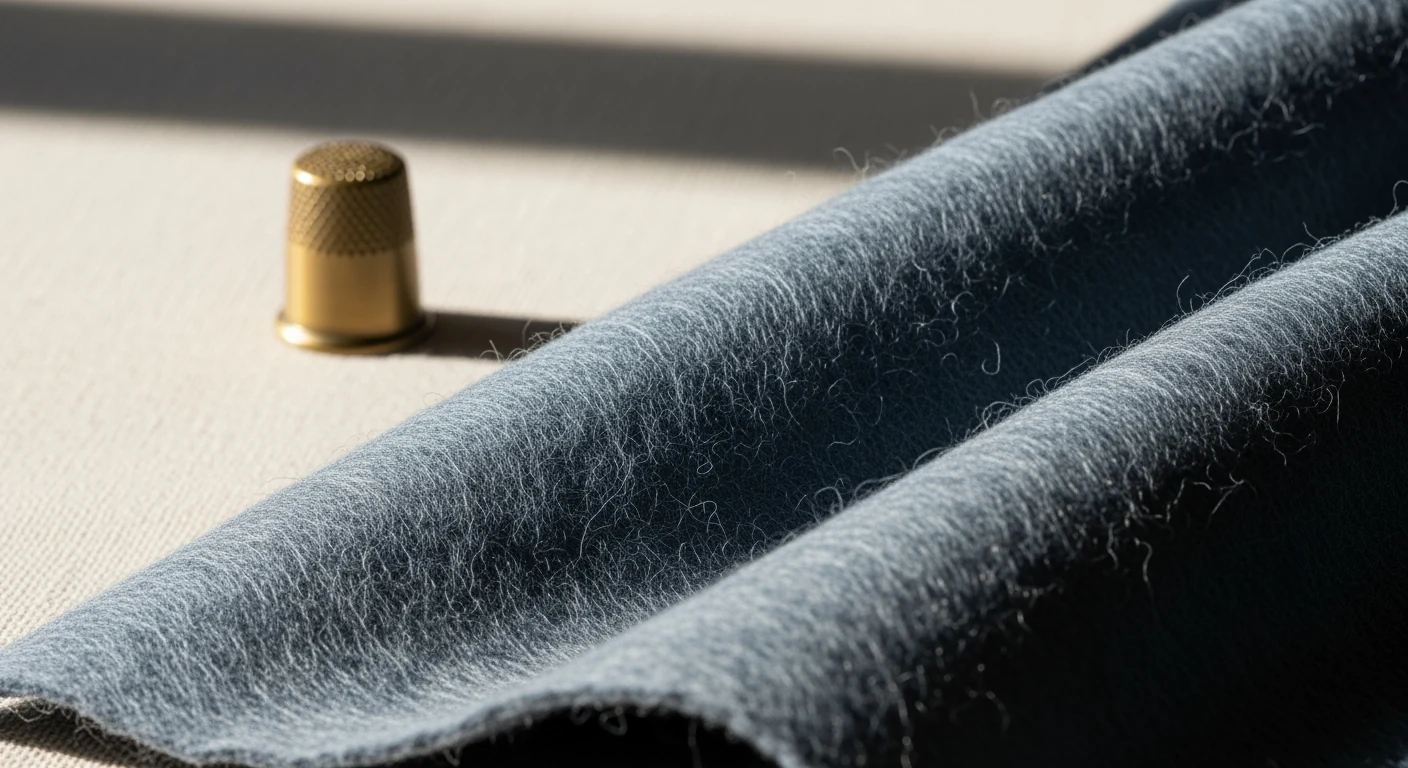
Three things. A Glowkin companion is weighted to the 350 to 500 gram band specifically for co-regulation, where supermarket plush is a stuffed silhouette. Glowkin uses muted slate-blue and forest wool-felt with embroidered features, where supermarket plush uses bright synthetic fabrics that fade within months. And Glowkin builds the plush as part of a ritual ecosystem — books, Hearthstone, named characters — where supermarket plush is a single object with no story behind it.
Be first to hold one.
Glowkin's first run is small and waitlist-led. Join The Glowkin letter — one slow note a month — and be first to know when Blaze, Fira, Glint and Ash arrive.