What makes an anxiety plush actually calming — four honest tests
Most anxiety plush sold in 2026 is either too light to register or too loud to sit still in a room. Four honest properties — weight, fabric, scent neutrality and story — separate the ones that earn a name from the ones that end up in the donation bag.
An anxiety plush is a comfort companion that supports a child during emotional overwhelm. Four properties decide whether it works: weight (350–500g concentrated in the lower body), fabric (OEKO-TEX-tested wool-felt or brushed cotton over hypoallergenic fill), scent neutrality (no fragrance or lavender impregnation), and story (a name and a one-page myth). Glowkin's plush companions meet all four and cost £34.99 from the Lancaster, UK studio. Without any one of the four, an anxiety plush stops being carried within a week.
What an anxiety plush is — and what it is not
An anxiety plush is a comfort soft toy designed to be carried through bedtime and transitions. It is not a clinical device and never stands in for parent care or professional support where worry runs deep.
A clear definition matters here. The NHS guidance for parents on anxiety in children draws the line between everyday worry and the kind that calls for a GP appointment; an anxiety plush sits well below that line. The plush supports the predictable, low-key routines paediatricians recommend for an anxious child by giving them a familiar, weighted object to hold. A working version in 2026 costs £34.99 from Glowkin, hand-finished in our Lancaster, UK studio with the four properties below at the heart of the build. Without all four (weight, fabric, scent neutrality, story), the plush stops being carried inside a week — nothing rewards a child for picking it up again. The plush is one quiet element of an evening wind-down.
Property one — weight
A working anxiety plush comes in somewhere in the 350g–500g range, with the bulk of the mass kept low in the body so it rests naturally on a small lap. The principle is deep pressure — the idea that sits behind weighted blankets, sized down for a body that moves.
Cleveland Clinic's explainer on weighted blanket benefits describes the mechanism plainly: even, distributed pressure helps a person's stress response settle. A blanket covers the body. A plush lands on one part of it — chest, lap or upper arm. Lighter than 350g and a small chest cannot read the pressure as warmth, so the calming effect simply does not arrive. Heavier than 500g and a young child cannot lift the toy upstairs alone. Glowkin's plush comes in at around 400g — a compromise designed to stay carryable across the years a child needs it. Parents should weigh the toy before buying; labels round generously, and the kitchen scale is the only honest reading.
Property two — fabric
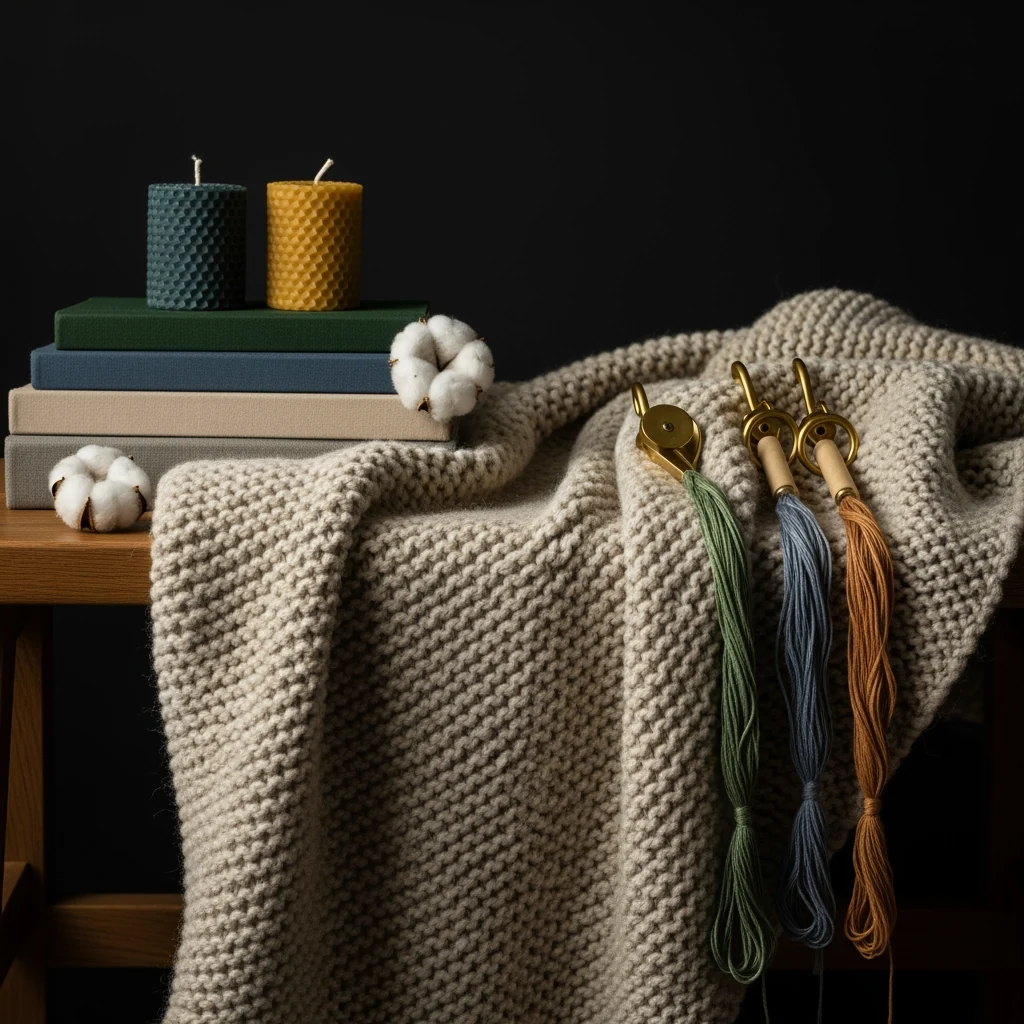
A working anxiety plush uses OEKO-TEX-tested wool-felt or brushed cotton over a hypoallergenic fill. Synthetic fabric looks fine on the shop floor and starts pilling within a fortnight. By the time a child is carrying it nightly, the surface has been through twenty wash cycles.
OEKO-TEX Standard 100 in its Class I tier — the strictest band, for items handled by babies and toddlers — certifies the fabric below the threshold for skin contact, with independent testing for residual formaldehyde, banned azo dyes and pesticide residues. A child experiencing anxiety is, often enough, a child who chews; the fabric matters more than the marketing tends to admit. Glowkin's plush is built on slate wool-felt with a brushed cotton lining and an inner pouch holding the mass. Double-stitched at stress points, washable on gentle at 30, no softener, dried flat. That kind of build keeps shape across twenty cycles; polyester mass-plush does not. The difference between a plush still held at age nine and one in the donation bag by half-term is almost always the fabric and the seamwork.
Property three — scent neutrality
A working anxiety plush has no fragrance built in — no lavender impregnation, no scented filler, no "calming oil" added at the factory. The toy should arrive smelling of nothing much, so that the child's body and the family home can lay down the scent profile over weeks.
Manufacturers get this property wrong most often, because scent reads as a value-add to a product team and as a problem to a child. Over time the toy collects its own smell — household detergent, traces of skin, hair, residue of an adult's perfume from a hugged jumper — and that accumulated layer is what makes a plush feel like the child's own. A pre-scented version overwrites the layer with synthetic lavender or chamomile that fades unevenly. The bond between child and comfort object — set out in our anxiety teddy primer — runs on familiarity and continuity, not perfume. A neutral-scent plush respects that bond; a scented one tries to engineer it. The honest version smells of the family detergent by the third wash.
Property four — story
A working anxiety plush carries a name and a brief origin myth. Without one, the toy stays generic; with one, it becomes a specific companion the child can address out loud. When a child tells Blaze that the dark is frightening, that is a quiet rehearsal for telling a parent — and both versions are progress.
Glowkin's four Dragonkin archetypes — courage, wonder, resilience and joy — give the child a small reference point for what the companion is meant to embody. The cue stays light; it is never narrated to the child. The child decides whether Blaze is the brave one tonight or the scared one, and either reading is correct. Once a plush has a name, children stop discarding it. The companions in the emotional companion range each ship with a one-page myth in the gift box; the child reads it once, forgets the wording, and keeps the name. With a story attached, the plush carries the brave part while the child handles the rest. That part is what most manufacturers skip.
Frequently asked questions
What is the difference between an anxiety plush and a regular soft toy?
An anxiety plush is a comfort soft toy designed for emotional overwhelm — weighted, scent-neutral and named, so the child can carry it during bedtime, transitions and difficult moments. A regular soft toy is a play object. The difference is the four properties — weight, fabric, scent neutrality and story — that turn a generic toy into a specific companion. The plush is otherwise the same shape and size; what differs is the intention behind the design.
Can an anxiety plush help with sleep?
It can support an existing bedtime ritual; it does not replace one. A weighted, neutral-scent plush offers the child a familiar pressure on the chest or lap as they settle, which assists the move from alert into sleep. It is not a sleep aid in the medical sense. NHS sleep advice for children identifies the structural pieces — predictable routines, a quiet bedroom, consistent timing. The plush sits as a warm object inside that scaffolding.
Is OEKO-TEX certification really necessary for a plush?
Yes. For a plush a child holds against the face every night, it is the floor of honest fabric. OEKO-TEX Standard 100, Class I, tests fabric below the threshold for skin contact in items used by babies and toddlers. Without the certification, the fabric may carry residual formaldehyde, banned azo dyes or pesticide residue from the dyeing process. A child who is anxious is also, often, a child who chews.
What weight is right for a child's anxiety plush?
Somewhere in the 350g–500g window for ages three to ten, with the mass kept low. Glowkin's plush comes in around 400g. Below 350g the deep-pressure effect drops below the threshold a small chest can read; above 500g a young child cannot lift it. Adult-weight versions at 1.5kg–2.5kg — a real category, see this Mumsnet thread on weighted teddies for adults — are a different product entirely, calibrated for older teens and grown-ups.
Does scent really matter for a comfort plush?
Yes — and most manufacturers get this wrong. A child's body and the family home write a scent onto the plush over weeks, and that layered smell is what makes the plush "theirs." A pre-scented plush overwrites the layer with a synthetic note that fades unevenly. Scent neutrality keeps the plush honest. The plush should arrive smelling of nothing in particular, so the bedroom and the family washing powder can do the rest.
How long should a quality anxiety plush last?
Two to ten years of daily handling, then another decade as a kept object on a shelf. Construction decides: stitched twice at stress points, OEKO-TEX fabric, machine-washable on gentle, weight sealed in an inner pouch. A £9 high-street plush survives a year. A £34.99 hand-finished one made in our Lancaster studio outlasts the childhood that begins with it. Build, not brand.
Be first to hold one.
Glowkin's first run is small and waitlist-led. Join The Glowkin letter — one slow note a month — and be first to know when Blaze, Fira, Glint and Ash arrive.